What's Really Going On
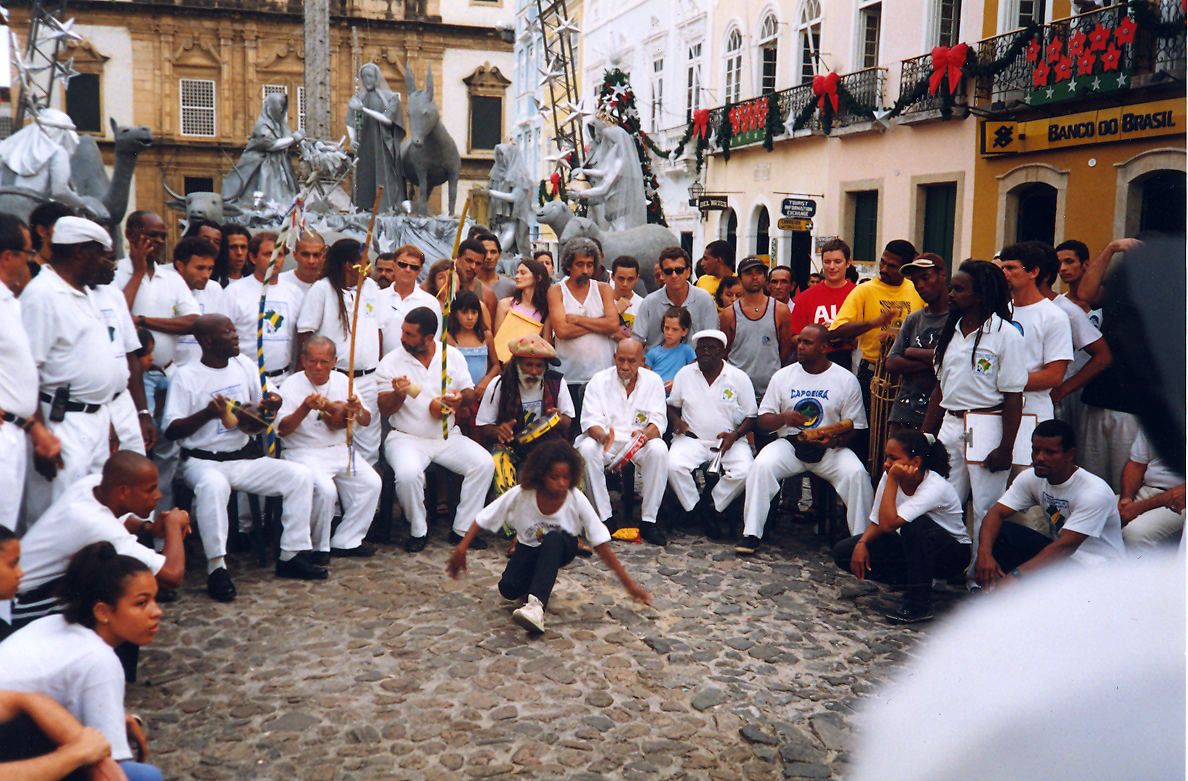
On a beach in Salvador, Bahia, a ring of people claps and sings around two figures crouched low, circling each other, eyes locked, weight balanced on the balls of their feet. One throws a slow, sweeping kick that stops inches from the other's head; the second ducks it with a movement that looks almost like a dance step, then answers with a cartwheel that becomes a kick of his own, the crowd's clapping picking up speed to match. A single-string bow instrument sets the tempo, rising and falling, and the whole scene reads, to a passing tourist filming on their phone, as an energetic street performance, all rhythm and flourish. It's also, unmistakably, a fight — just one where nobody in the ring has agreed to actually land a blow.
This is capoeira, and both readings of that scene are correct at once, which is exactly how it was designed to work. The art form was born among enslaved people in Brazil, most of them forcibly brought from West and Central Africa — Congo, Angola, Mozambique — during the transatlantic slave trade. On the plantations where they were held, particularly across the northeastern region of Bahia, practicing martial arts or carrying weapons was strictly forbidden. Capoeira grew out of a direct workaround to that rule: if a fighting style wasn't allowed, it would simply stop looking like one.
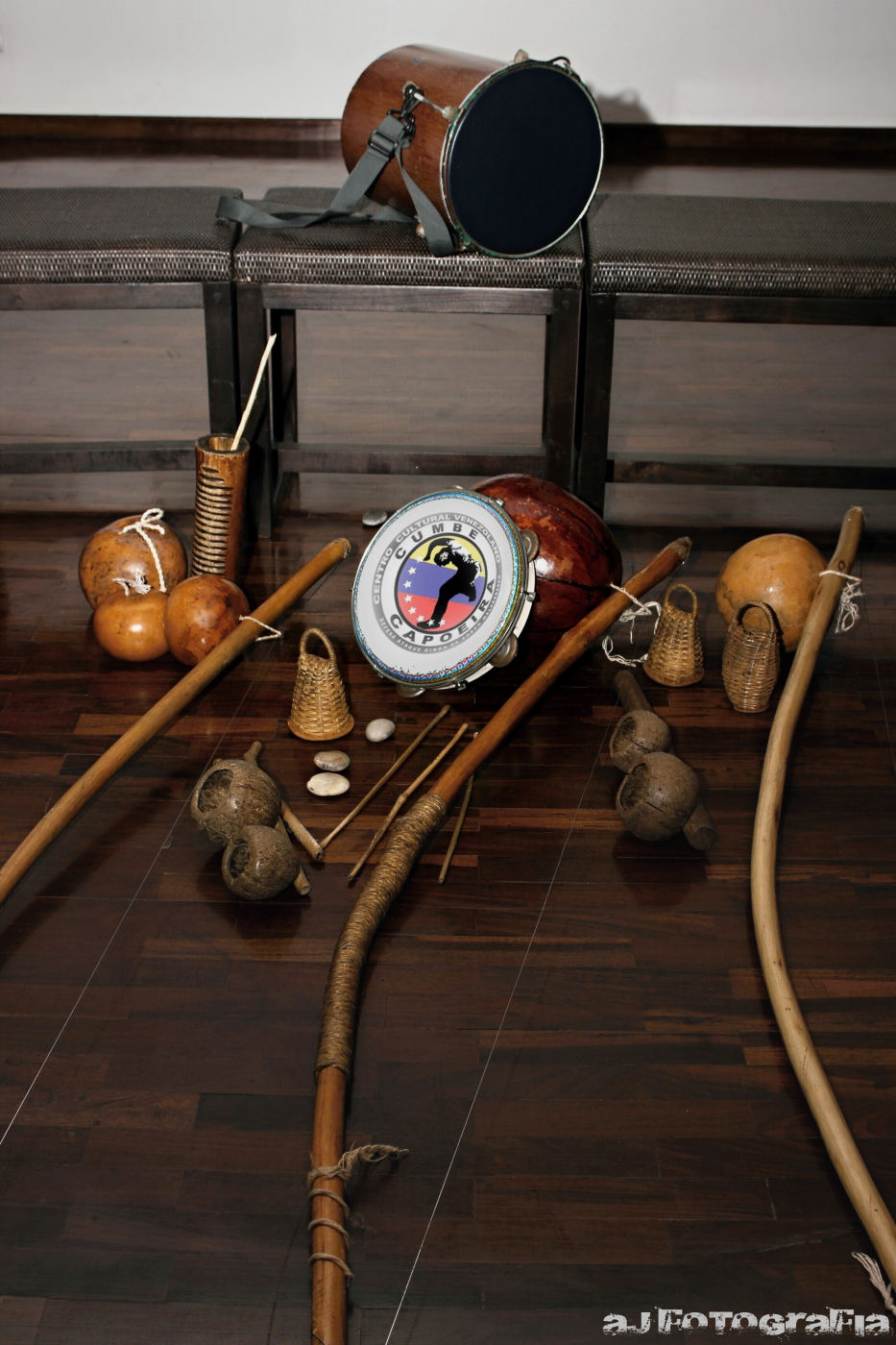
Every element of what's now considered capoeira's signature style once served that camouflage. The roda — the circle of onlookers clapping and singing — created a plausible cover story: a group activity, a game, not a rehearsal for violence. The berimbau, a single-string percussion bow that leads the music, doesn't just keep time; different rhythms traditionally signal how aggressive or playful the exchange inside the circle should be, functioning almost like a coded set of instructions hidden inside a song. Tellingly, practitioners still describe a capoeira match with the verb jogar — "to play" — rather than lutar, "to fight."
To an overseer walking past, it looked like enslaved people were playing. It was combat training in disguise.
Where This Comes From
The stakes behind that disguise were serious. Beyond individual self-defense, capoeira became tied to broader networks of resistance — preparation for escape, and connections to quilombos, the self-governed communities formed by people who had successfully fled slavery. Authorities didn't fear capoeira because it looked dangerous; they feared it because, understood correctly, it was.
Brazil abolished slavery in 1888, but that didn't make capoeira safe to practice openly. The country's 1890 Penal Code explicitly outlawed it, lumping practitioners in with vagrants and criminals — a legal classification that stuck for decades, especially in Rio de Janeiro, where capoeira became associated in the public imagination with street gangs. Arrests for practicing it continued well into the 20th century.
Beyond the Basics
That changed largely through one man's persistence. In the early 1930s, Manoel dos Reis Machado — known as Mestre Bimba — began developing a more standardized style he called Capoeira Regional, built around formal teaching sequences rather than purely improvised street exchanges. In 1932 he opened Brazil's first official capoeira school in Bahia, and spent years pushing for the art's legitimacy. In 1937, the government of Getúlio Vargas — then building a nationalist cultural identity for Brazil — formally recognized capoeira, transforming it almost overnight from a criminalized practice into a symbol of national heritage.
Not everyone wanted capoeira reshaped into a standardized sport, though. In 1941, Vicente Ferreira Pastinha — Mestre Pastinha — opened his own school preserving a slower, more ritualistic, more overtly musical style that became known as Capoeira Angola, deliberately distinct from Bimba's sportier Regional approach. That split, between Regional's combat-sport lineage and Angola's traditionalist one, still defines the two major branches capoeira is taught in today, in Brazil and far beyond it.
In 2014, UNESCO added the roda de capoeira to its Representative List of the Intangible Cultural Heritage of Humanity, explicitly recognizing it as a space where skills pass from generation to generation through observation and imitation, and one that "promotes social integration and the memory of resistance to historical oppression." What started as a survival tactic disguised as play is now taught in gyms on nearly every continent, its history acknowledged rather than hidden.
What to Know If You Visit
A few pointers if you want to watch or try capoeira in Brazil:
- Public rodas happen regularly in cities like Salvador, especially around the historic Pelourinho district — watching is welcome, but ask before filming up close or stepping into the circle.
- Most academies (academias) offer trial classes for visitors — expect to start with the ginga, the basic swaying step everything else builds from.
- Capoeira Angola (slower, lower, more ritualistic) and Capoeira Regional (faster, more acrobatic) are the two main styles — many schools today teach a blend of both.
- A street roda passing a hat around is normal — a small donation is appreciated, especially in tourist-heavy areas where performers rely on it.
- Even a few words of the call-and-response songs (sung in Portuguese) are welcomed as genuine participation, not mockery — nobody expects visitors to know the lyrics.
- Never enter the roda uninvited, even to demonstrate a move — wait for a mestre or an experienced player to wave you in.
The Bigger Picture
The ambiguity that once kept people alive — is this a dance or a fight? — never fully disappeared; capoeira kept it on purpose, long after the danger that demanded it was gone. Every roda still performed today, whether on a beach in Bahia or in a studio thousands of miles away, carries that original necessity inside its rhythm, even for people who've never once had to hide what they were actually practicing.
Curious how nearby cultures handle similar rules? Don't miss our pieces on The Straw That Passes From Mouth to Mouth, and Nobody Minds and The Coffins That Look Like Everything But a Coffin.


